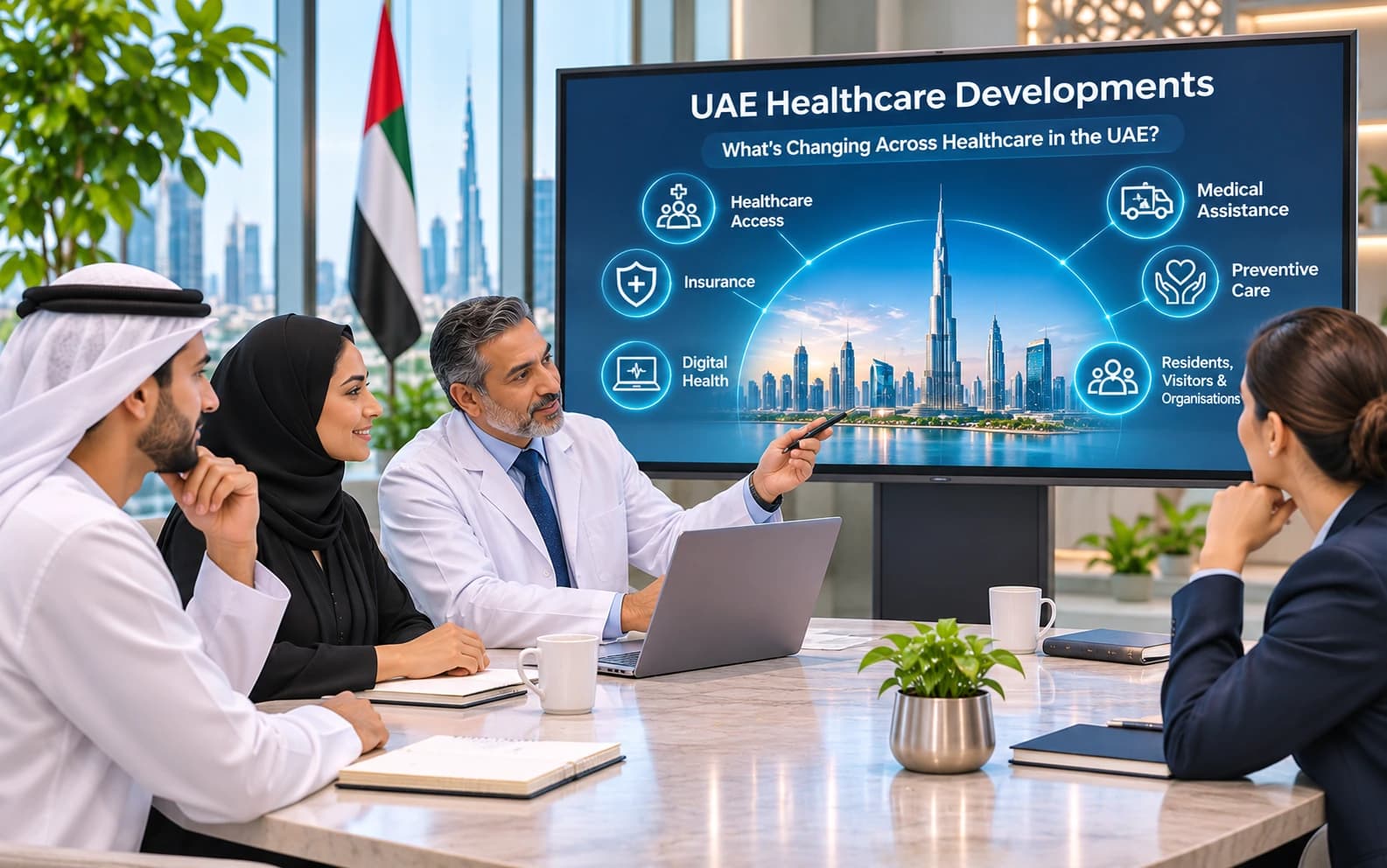
The UAE healthcare sector is moving towards a more connected, digitally enabled and prevention-focused model of care. Across the Emirates, healthcare development is increasingly shaped by patient experience, health insurance, digital transformation, preventive health and the ability to deliver specialised care efficiently.
For patients, employers, insurers and healthcare providers, these changes are influencing how healthcare is accessed, coordinated and managed.
A More Connected Healthcare System
The UAE has been working towards greater coordination across its healthcare ecosystem, bringing public and private sector stakeholders together around quality, patient safety, efficiency and sustainability. Abu Dhabi's healthcare strategy, for example, places emphasis on patient experience, healthcare capacity, quality and value for money, alongside digital health development.
This creates an environment where healthcare is increasingly viewed as a connected journey rather than a series of individual appointments or services.
For patients, that can mean easier access to providers and more coordinated care. For organisations and insurers, it creates a greater need for healthcare partners that can connect patients, providers and payers effectively.
Digital Health Is Moving From Convenience to Infrastructure
Digital transformation is becoming a significant part of the UAE healthcare landscape.
Recent national initiatives include the Emirates Health platform and the use of artificial intelligence to analyse health behaviour and support preventive planning. MoHAP has also highlighted projects using AI and digital technologies to improve health services and connect information across the healthcare ecosystem.
The direction is increasingly towards healthcare that can use data and technology to support earlier intervention, more informed decisions and more personalised services.
Insurance Is Becoming More Central to Healthcare Access
Health insurance continues to play a major role in how healthcare is accessed and financed in the UAE.
Since 1 January 2025, health insurance has been required for private-sector employees and domestic workers as a prerequisite for issuing or renewing residency permits, with the requirement extending across the UAE.
This means employers, insurers and healthcare providers are increasingly connected within the same healthcare journey.
For employers, the question is no longer simply whether employees have coverage. There is growing importance around how that coverage is used, how healthcare cases are coordinated and how healthcare expenditure can be managed sustainably.
Prevention Is Becoming More Important
The UAE is also placing greater emphasis on preventive healthcare and early detection.
The National Health and Nutrition Survey 2024–2025 was developed to provide evidence for stronger preventive care and future health planning. In 2025, a national hypertension campaign conducted more than 110,000 screenings across the Emirates, demonstrating the scale of the country's focus on early detection and non-communicable disease prevention.
For employers, this reinforces the value of workplace health screening, medical camps and preventive healthcare programmes that help employees understand potential health risks earlier.
Healthcare Is Becoming More Patient-Centred
Healthcare development is also increasingly concerned with the experience surrounding treatment.
Patients today may need more than access to a doctor. They may require help navigating providers, understanding treatment options, coordinating insurance approvals or accessing specialist care.
This is particularly relevant for the UAE, where residents, expatriates, visitors and international patients may interact with different healthcare and insurance systems.
Where Bluedot Fits
These developments create a growing need for healthcare coordination between patients, providers, insurers and organisations.
Bluedot Medical Assistance operates within this space.
Our services connect healthcare stakeholders across areas including local medical assistance, insurance coordination, healthcare cost containment, corporate healthcare and international treatment.
For insurers, this can mean coordinating medical cases and providers.
For corporate organisations, it can mean helping employees access appropriate healthcare while supporting greater visibility over healthcare expenditure.
For patients travelling internationally, it can mean coordinating hospitals, medical documentation, treatment arrangements and the wider healthcare journey.
Looking Ahead
The UAE's healthcare direction is increasingly defined by digital transformation, preventive health, patient-centred care, insurance integration and more coordinated healthcare delivery.
For healthcare organisations, insurers and employers, the opportunity is not simply to adopt new technology or services. It is to connect them in ways that make healthcare more accessible, efficient and sustainable.
Bluedot's role is to help bridge that connection — bringing together medical expertise, healthcare providers, insurers and patients to make healthcare journeys more coordinated.