Healthcare rarely happens in one place.
A patient may begin with a general practitioner, move to a specialist, complete diagnostic investigations at another facility, rely on an insurer for approval and eventually receive treatment at a hospital. If these parts of the journey are not connected, the patient can end up carrying information between providers and managing communication between multiple organisations.
Connected healthcare is about changing that experience.
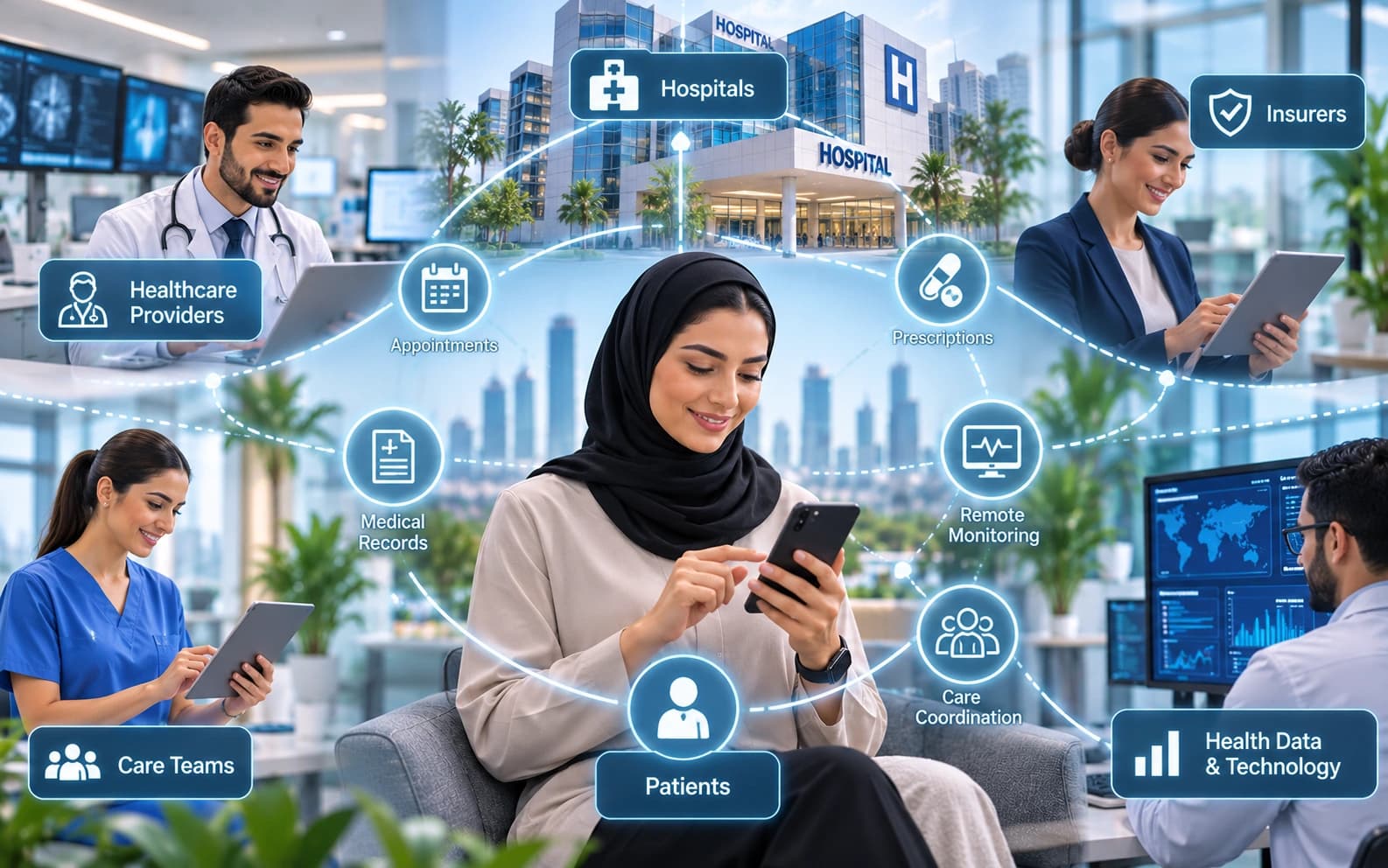
It brings patients, healthcare providers, hospitals, insurers, medical assistance teams and technology into a more coordinated healthcare journey.
From Individual Services to One Healthcare Journey
Traditional healthcare can feel fragmented because each organisation often manages its own part of the patient's care.
The clinic manages the consultation.
The laboratory manages the investigation.
The specialist manages the treatment recommendation.
The insurer manages the coverage.
The hospital manages the admission.
The patient is often left to connect everything together.
Connected healthcare aims to create greater continuity between these different points of care, allowing relevant information and communication to move between the appropriate stakeholders.
Why Coordination Matters
Coordination becomes particularly important when a healthcare case is complex.
A patient undergoing major surgery, managing a chronic condition or travelling internationally for treatment may interact with several healthcare providers and organisations.
Without effective coordination, this can result in:
Repeated communication
Delays between stages of care
Incomplete medical information
Difficulty understanding the next step
Unnecessary administrative work
A fragmented patient experience
A coordinated approach can help the relevant stakeholders understand where the patient is in their healthcare journey and what needs to happen next.
Technology Is Enabling the Connection
Technology is an important part of connected healthcare.
Digital medical records, electronic referrals, virtual consultations, appointment platforms, remote monitoring and secure information exchange can make it easier for healthcare information to move between appropriate providers.
But technology alone does not create connected healthcare.
A digital platform can transfer information, but someone still needs to understand the patient's situation, coordinate the stakeholders and make sure the appropriate healthcare pathway is followed.
That is where human healthcare coordination remains important.
Connecting Patients With Providers
For patients, connected healthcare should make the journey easier to navigate.
Instead of asking:
"Who do I contact next?"
the healthcare system should provide greater clarity around:
"What happens next, and who is coordinating it?"
This can be particularly valuable when a patient needs to move between primary care, specialist care, diagnostics, hospital treatment and follow-up.
Connecting Healthcare With Insurance
Insurers are also an important part of the connected healthcare ecosystem.
A treatment pathway may require communication between the treating provider and insurer regarding medical documentation, treatment recommendations, approvals and costs.
When these stakeholders are better coordinated, the patient does not need to act as the intermediary between the medical and insurance sides of their healthcare journey.
For insurers, better visibility into the medical case can also support more informed healthcare decisions and appropriate utilisation.
Connected Healthcare Across Borders
The need for coordination becomes even greater when healthcare crosses national borders.
An international patient may have a referring doctor in one country, an insurer in another and a receiving hospital somewhere else.
Medical records need to reach the appropriate specialist. Treatment needs to be confirmed. Visa arrangements may be required. Travel and hospital admission need to align.
Bluedot supports this type of cross-border healthcare coordination by connecting patients, hospitals, medical teams, insurers and other relevant stakeholders throughout the treatment journey.
Where Bluedot Fits
Bluedot Medical Assistance operates at the intersection between the different parts of the healthcare ecosystem.
Our role can include coordinating:
Patients and Families
With appropriate healthcare providers and hospitals.
Healthcare Providers
With specialists, hospitals and other medical services involved in the case.
Insurers
With medical providers and patients around healthcare treatment and case coordination.
International Hospitals
With patients and referring healthcare providers when treatment takes place abroad.
Corporate Organisations
With healthcare and medical assistance services for their employees.
The objective is not simply to add another service to the healthcare journey. It is to connect the services already involved so that the journey works more effectively as a whole.
From Fragmented Care to Coordinated Care
Connected healthcare does not mean that every healthcare service needs to operate through one platform.
It means the right information, people and services can work together around the patient.
The shift is from:
Multiple Providers → Multiple Conversations → Patient Coordinates
towards:
Connected Providers → Coordinated Communication → Patient Supported
The Future of Healthcare Is Connected
As healthcare becomes more digital, specialised and international, coordination will become increasingly important.
Patients will continue to access care across different providers. Insurers will continue to manage complex healthcare expenditure. Hospitals will continue to specialise. Technology will continue to connect healthcare information.
The organisations that can effectively bring these elements together will play an increasingly important role in the healthcare ecosystem.
Bluedot Medical Assistance helps create that connection — bringing patients, healthcare providers, hospitals, insurers and medical teams together around a more coordinated healthcare journey.