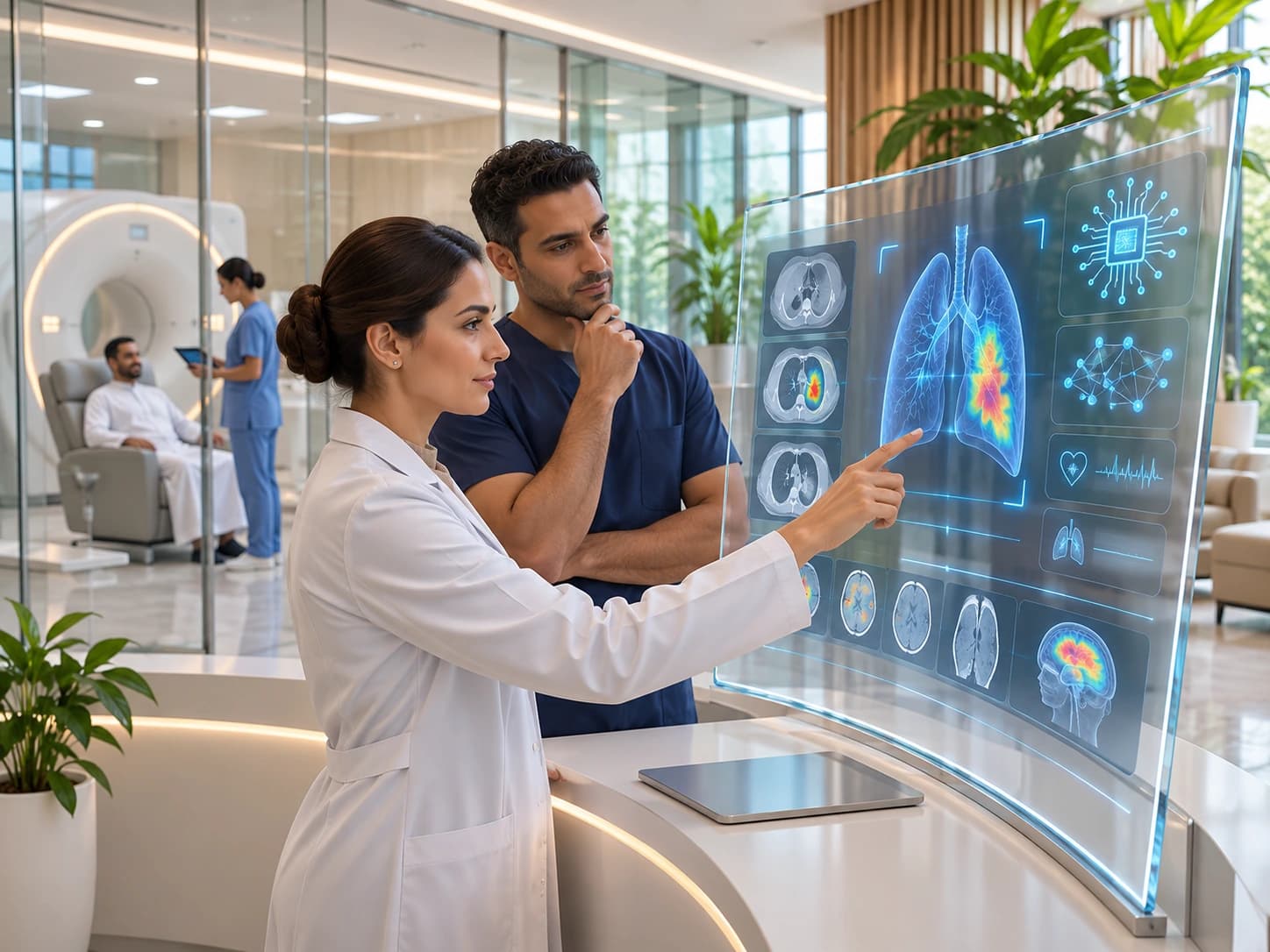
Artificial intelligence is moving from research environments into everyday healthcare. It is being explored and implemented across diagnosis, medical imaging, clinical decision support, patient monitoring, treatment planning, drug development and healthcare operations. The World Health Organization recognises AI's potential to improve health outcomes and support healthcare systems, while emphasising that its use must remain safe, ethical, equitable and centred on people.
For patients and healthcare professionals, the important question is not whether AI will replace healthcare. It is how AI can support better-informed clinical and operational decisions while keeping qualified healthcare professionals responsible for patient care.
From Data to Clinical Insight
Healthcare generates enormous amounts of information, including medical records, laboratory results, diagnostic images, genetic information and data from connected devices.
AI systems can analyse large and complex datasets much faster than conventional methods, helping identify patterns that may be difficult to detect manually. This is creating opportunities across screening, diagnosis, disease prediction, treatment decisions and personalised care.
AI in Medical Imaging
One of the most established areas of healthcare AI is medical imaging.
AI-assisted systems can analyse images such as X-rays, CT scans and other diagnostic imaging to identify patterns that may warrant closer clinical review. In some healthcare systems, AI-assisted diagnostics are already being used, particularly in imaging and disease detection.
The role of AI is generally to support the clinician, helping prioritise or interpret information rather than independently determining a patient's diagnosis.
For patients, this could contribute to earlier identification of abnormalities and more efficient diagnostic workflows when appropriately validated and integrated into clinical practice.
Supporting Clinical Decisions
AI can also support healthcare professionals by bringing together information from different sources and identifying patterns relevant to a patient's condition.
Clinical decision-support systems may assist with assessment, triage, risk prediction and treatment planning. WHO identifies clinical assessment, care triaging, treatment and follow-up as areas where AI is increasingly being explored.
This does not remove the need for medical expertise. Instead, AI can provide another layer of information that clinicians can consider alongside the patient's history, examination, investigations and individual circumstances.
Patient Monitoring Beyond the Hospital
AI is also contributing to the development of more continuous approaches to patient monitoring.
Wearable devices, sensors and digital health platforms can generate information about an individual's health. AI and advanced analytics can help process this information and identify changes or patterns that may require attention.
This creates opportunities for healthcare to move beyond occasional consultations towards more continuous monitoring for appropriate patients and conditions.
Towards More Personalised Healthcare
Not every patient responds to treatment in exactly the same way.
AI can help analyse combinations of clinical, genetic, behavioural and other health information to support more individualised approaches to prevention, diagnosis and treatment. WHO identifies personalised medicine and individualised care among the areas where AI and health data analytics have significant potential.
The aim is not to allow an algorithm to decide what is best for every patient. It is to give healthcare professionals better information to consider when developing an appropriate care plan.
AI Is Also Changing Healthcare Operations
The impact of AI extends beyond the consultation room.
Healthcare organisations are exploring AI for areas such as resource planning, workflow optimisation, administrative processes, patient communication and health-system management. WHO identifies healthcare planning, resource allocation and health-system management among the potential applications of AI.
This matters because better healthcare is not only about better clinical technology. It also depends on whether patients can access the right service at the right time and whether healthcare resources are being used effectively.
The UAE's Direction
The UAE is actively incorporating AI into its healthcare development. The Ministry of Health and Prevention has outlined a comprehensive plan for integrating artificial intelligence into medical services as part of the UAE's broader AI strategy.
This reflects a wider shift in the UAE towards digitally enabled healthcare, where technology is increasingly being used alongside medical expertise to improve services and patient experience.
The Importance of Responsible AI
The potential of AI comes with important responsibilities.
Healthcare AI depends on the quality of the data used to develop and operate these systems. Poor-quality or incomplete data can affect results. There are also important considerations around patient privacy, cybersecurity, bias, transparency, accountability and clinical safety.
WHO continues to emphasise the need for appropriate governance, regulation, ethical standards and human oversight as AI becomes more integrated into healthcare.
AI should therefore be viewed as a clinical and healthcare support technology, not a replacement for qualified medical judgement.
Where Bluedot Fits
As healthcare becomes increasingly digital and interconnected, coordination remains important.
Bluedot Medical Assistance works across patients, healthcare providers, insurers and medical teams. Our role is to help coordinate the healthcare journey around the technologies and clinical services being used — from medical case coordination and specialist access to treatment planning and international healthcare.
For patients, technology may provide additional information and access to care. For insurers and organisations, it can create new opportunities to manage healthcare more effectively.
But technology alone does not coordinate a healthcare journey.
Bluedot's role is to connect the people, medical expertise and healthcare providers behind it.
The Future of AI in Healthcare
AI is likely to become increasingly embedded across healthcare — from how diseases are detected to how treatment is planned and how patients are monitored.
The most meaningful progress will not come from technology operating independently. It will come from AI, healthcare professionals and connected healthcare systems working together, with patient safety and clinical judgement remaining at the centre of care.