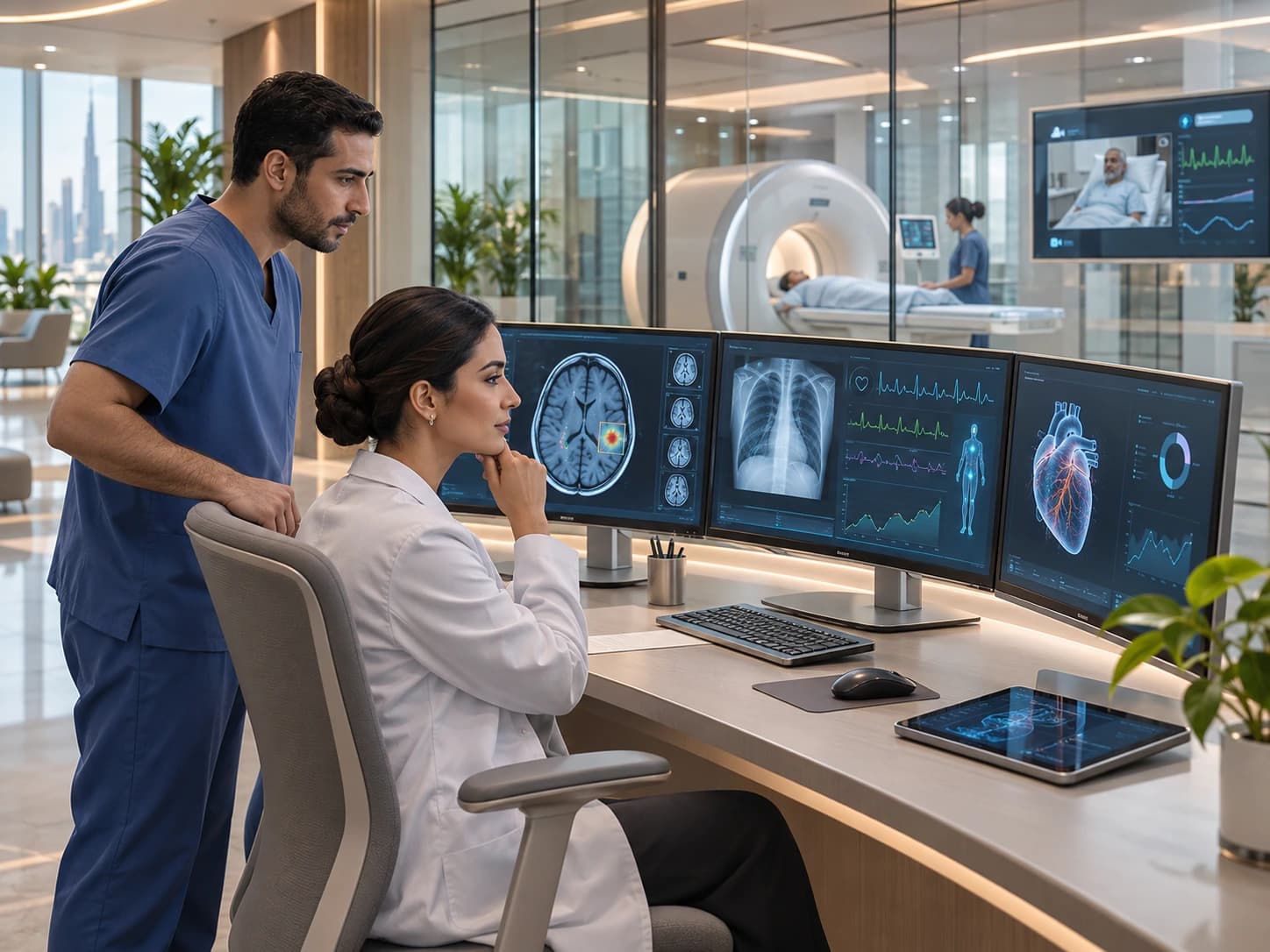
Diagnosis is the foundation of effective healthcare. Before a clinician can decide how to treat a patient, they need reliable information about what is happening inside the body.
Today, diagnostics are becoming increasingly digital. Advanced imaging, connected devices, electronic diagnostic records, remote monitoring and data-driven tools are changing how information is collected, analysed and shared between healthcare professionals.
The shift is not simply about replacing traditional tests with technology. It is about making diagnostic information more accessible, connected and useful for clinical decision-making. The World Health Organization describes diagnostics as essential across prevention, screening, diagnosis, case management, monitoring and treatment.
From Tests to Connected Diagnostic Information
Traditional diagnostics can involve laboratory testing, imaging, pathology, ECGs and other clinical investigations. Digital technologies are increasingly connecting these different sources of information.
A patient's diagnostic information can include laboratory results, medical images, clinical observations and monitoring data. When these records can be securely accessed and shared between appropriate healthcare professionals, they can provide a more complete picture of the patient's condition.
This is particularly valuable when a patient sees multiple specialists or requires treatment across different healthcare facilities.
Advanced Medical Imaging
Medical imaging is one of the areas where digital technology has had a significant impact.
X-ray, CT, MRI, ultrasound and other imaging technologies provide clinicians with detailed information that supports diagnosis, treatment planning and monitoring.
Digital systems can also make it easier for images to be stored, transferred and reviewed by specialists in different locations. Teleradiology, for example, allows medical images to be transmitted to radiologists or specialist teams who may be located elsewhere. WHO identifies teleradiology as an important opportunity for expanding access to diagnostic imaging expertise.
This can be particularly relevant when specialist interpretation is required but the appropriate expertise is not immediately available at the patient's local facility.
Artificial Intelligence in Diagnostics
Artificial intelligence is becoming another layer within diagnostic medicine.
AI systems can analyse large amounts of medical information and identify patterns in diagnostic images or other clinical data. These technologies are being explored across areas including radiology, pathology, cancer screening and other forms of disease detection.
The purpose is not to replace the clinician.
Instead, AI can help healthcare professionals identify areas that may require closer examination, prioritise certain cases or provide additional information to support clinical assessment.
The final interpretation remains dependent on qualified healthcare professionals and the clinical context of the individual patient.
Remote Monitoring
Digital diagnostics are also extending beyond hospitals and clinics.
Connected devices and remote monitoring technologies can collect health information outside traditional healthcare settings. Depending on the technology and condition being monitored, this may include vital signs, glucose levels, cardiac information or other health measurements.
WHO recognises remote monitoring as part of the broader digital health ecosystem, alongside telemedicine, diagnostic services and the transmission of medical information.
For appropriate patients, continuous or periodic monitoring can give healthcare professionals additional information between clinical appointments.
Diagnostics Across Borders
Digital diagnostics can also support international healthcare.
When a patient is considering treatment abroad, their existing diagnostic information can be shared with an appropriate receiving hospital for review. Medical reports, imaging and laboratory results can help the overseas specialist understand the patient's condition before the patient travels.
This can support a more informed discussion around potential treatment options and whether further investigations are required.
For international patients, the ability to transfer diagnostic information securely can therefore become an important part of the medical travel journey.
The UAE's Digital Diagnostic Direction
The UAE has been investing in digital healthcare infrastructure and diagnostic technologies.
MoHAP previously launched a National Platform for Radiology and Pathology designed to use large-scale medical data and AI technologies to support the analysis of radiographs, MRI, ultrasound and pathology information. More recently, the UAE has continued developing a digital healthcare ecosystem incorporating data and artificial intelligence.
The UAE is also developing policies around smart health services and AI that emphasise data quality, privacy, impact measurement and responsible adoption.
These developments point towards a healthcare environment where diagnostic information is increasingly connected to digital platforms and clinical decision-making.
Technology Still Needs Clinical Expertise
More technology does not automatically mean better diagnosis.
Diagnostic systems need appropriate validation, high-quality data, trained healthcare professionals and safeguards around privacy and patient safety. WHO continues to emphasise that digital health technologies should be implemented in ways that are ethical, equitable, secure and centred on people.
A digital diagnostic result still needs to be interpreted in the context of the patient's symptoms, medical history, examination and other clinical information.
Where Bluedot Fits
For Bluedot Medical Assistance, digital diagnostics are particularly relevant to medical case coordination and international healthcare.
When coordinating a patient's case, medical reports, imaging and laboratory information may need to move between the patient, treating doctor, insurer and receiving hospital.
Bluedot helps coordinate this medical information with the relevant healthcare providers so that specialists can review the available documentation and determine the appropriate next step.
For patients travelling internationally, this can help establish the medical requirement before travel and reduce unnecessary uncertainty around the treatment journey.
The Future of Diagnostics
The next generation of diagnostics will increasingly combine advanced imaging, connected devices, digital records, data analytics and artificial intelligence.
The real value will not come from technology operating independently. It will come from connecting reliable diagnostic information with the healthcare professionals who can interpret it and the systems that can act on it.
For patients, that can mean earlier and more informed assessment. For healthcare providers, better access to diagnostic information. For insurers and assistance companies, greater visibility into the clinical circumstances behind a case.
Digital diagnostics are changing how healthcare information is generated, shared and understood — but clinical expertise remains at the centre of turning that information into appropriate care.