Understanding the Condition, Diagnosis & Treatment
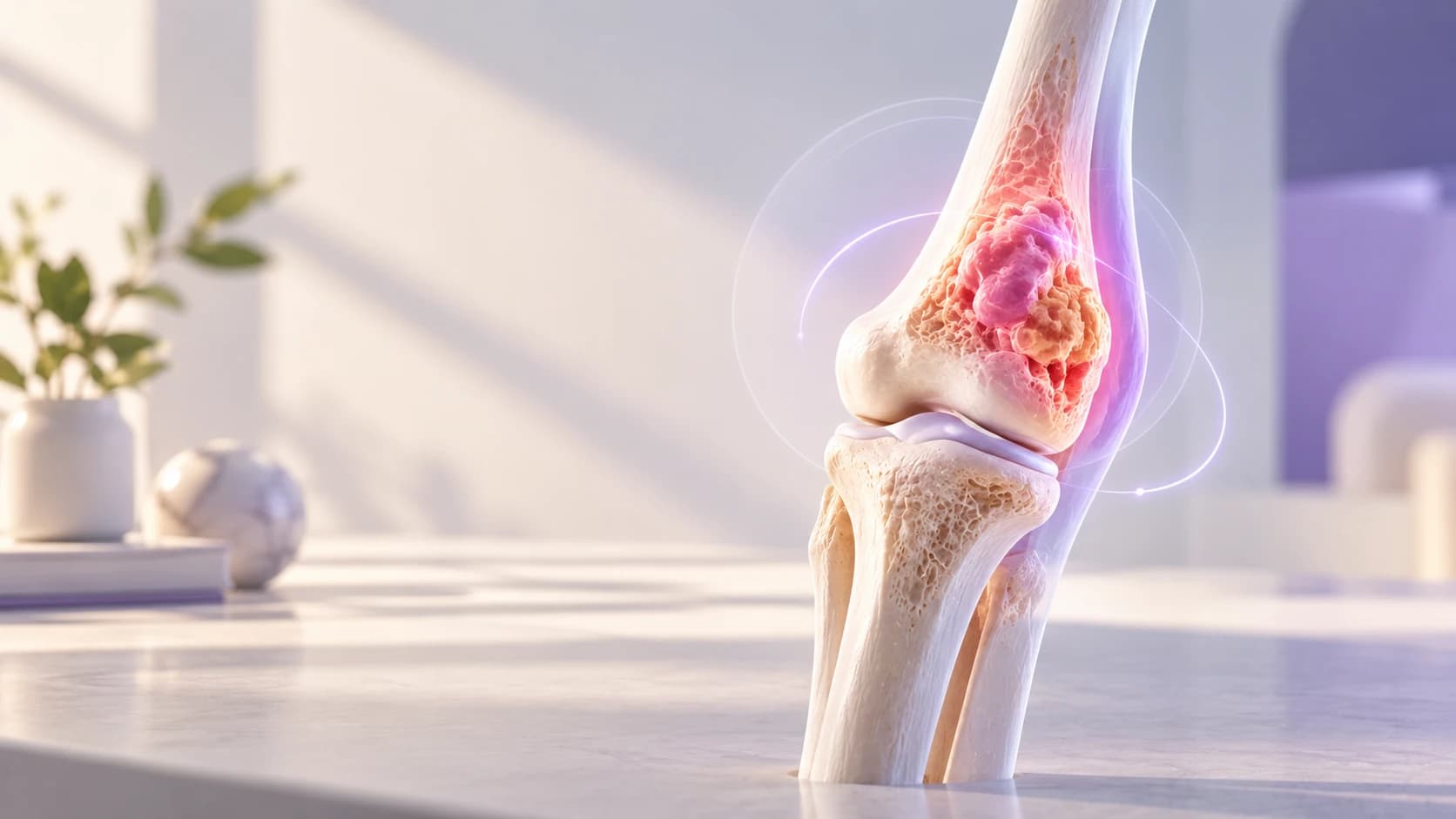
Osteosarcoma is a rare type of bone cancer that develops from the cells responsible for forming bone. It most commonly affects children, adolescents and young adults, although it can occur at other ages. It often develops in the long bones around the knee or upper arm.
Because osteosarcoma is uncommon and treatment can be complex, patients are generally managed by a specialist multidisciplinary team with experience in bone cancers.
Understanding Osteosarcoma
Osteosarcoma develops when abnormal cells begin to grow uncontrollably and form cancerous bone tissue. It most commonly occurs in the long bones, particularly around the knee, but can develop in other bones.
The condition can vary from patient to patient. Early assessment is important because symptoms such as persistent bone pain or swelling can sometimes be mistaken for sports injuries or other musculoskeletal problems.
Signs & Symptoms
The symptoms of osteosarcoma can develop gradually and may vary depending on where the tumour is located.
Common symptoms can include:
- Persistent or worsening bone pain
- Swelling or a lump near a bone or joint
- Pain that becomes more noticeable at night or during activity
- Reduced movement around an affected joint
- Difficulty walking or using the affected limb
- A bone fracture occurring with little or no significant injury
These symptoms can have many possible causes and do not necessarily mean someone has cancer. Persistent or unexplained symptoms should be assessed by a qualified healthcare professional.
How Is Osteosarcoma Diagnosed?
Diagnosis usually begins with a clinical assessment and imaging of the affected area.
Depending on the findings, investigations may include X-rays, MRI or other imaging studies to understand the location and extent of the abnormal growth.
A biopsy may then be required to examine tissue under a microscope and confirm the diagnosis.
Further investigations may be recommended to determine whether the cancer has spread to other parts of the body and to help the specialist team plan treatment.
Treatment Options
Treatment depends on factors including the location and size of the tumour, whether the disease has spread, the patient's age and overall health.
Treatment commonly involves a combination of therapies.
Chemotherapy may be used before and/or after surgery to treat cancer cells and reduce the risk of recurrence.
Surgery is often an important part of treatment and aims to remove the tumour while preserving as much function of the affected limb as possible where clinically appropriate.
In some cases, additional treatment may be considered depending on the individual diagnosis and response to treatment.
Because osteosarcoma is complex, treatment planning is generally carried out by a multidisciplinary specialist team.
Why Specialist Care Matters
Osteosarcoma requires careful coordination between different medical specialties, which may include oncology, orthopaedic oncology, radiology, pathology, surgery, rehabilitation and other specialists.
The treatment plan should be based on a complete clinical assessment and the patient's individual circumstances.
For patients considering treatment locally or internationally, access to an experienced specialist centre can be an important part of the decision-making process.
When Should You Consider a Second Medical Opinion?
A second medical opinion can provide an independent specialist perspective when a diagnosis of osteosarcoma has been made or when a major treatment plan has been recommended.
It may help patients and families better understand:
- The diagnosis
- The proposed treatment plan
- Surgical options
- Alternative treatment approaches
- Expected treatment pathway
A second opinion should complement, not replace, advice from the patient's treating medical team.
Request a Second Medical OpinionYour Treatment Journey
A cancer diagnosis can involve multiple stages of assessment and treatment. Understanding the journey can help patients and families prepare for what comes next.
Bluedot Medical Assistance can support patients seeking specialist healthcare by coordinating medical documentation, connecting cases with appropriate healthcare providers and helping navigate treatment options where international care is being considered.
Explore Treatment OptionsFrequently Asked Questions
Is osteosarcoma treatable?
Osteosarcoma can be treated using a combination of therapies depending on the individual case. Treatment decisions depend on factors such as the tumour's location, stage and response to treatment.
Who usually treats osteosarcoma?
Treatment is typically managed by a multidisciplinary team with experience in bone cancer, which may include oncologists, orthopaedic oncologists, surgeons, radiologists, pathologists and rehabilitation specialists.
Does osteosarcoma always require surgery?
Surgery is commonly an important part of treatment, but the overall treatment plan depends on the individual diagnosis and clinical assessment.
Can osteosarcoma spread to other parts of the body?
Yes. Osteosarcoma can spread, which is why additional investigations may be performed after diagnosis to determine the extent of the disease.
Should I get a second medical opinion?
For a rare and complex condition such as osteosarcoma, some patients and families may choose to seek an independent specialist opinion before making major treatment decisions.
Related Guides
- Cancer Care
- Understanding Cancer Diagnosis
- Cancer Treatment Options
- Chemotherapy
- Cancer Surgery
- Understanding Cancer Staging
- Orthopaedic Care
- Bone Tumours
- Bone Surgery
- Limb-Sparing Surgery
- Orthopaedic Rehabilitation
- Related Services
- Second Medical Opinion
- International Medical Value Travel
- Insurance Treatment Facilitation
- Need Help Understanding Your Options?
- When Treatment Is Complex, Having the Right Information Matters.
If you or a family member has been diagnosed with osteosarcoma, Bluedot Medical Assistance can help coordinate medical information and explore appropriate specialist treatment pathways.
Speak to Bluedot